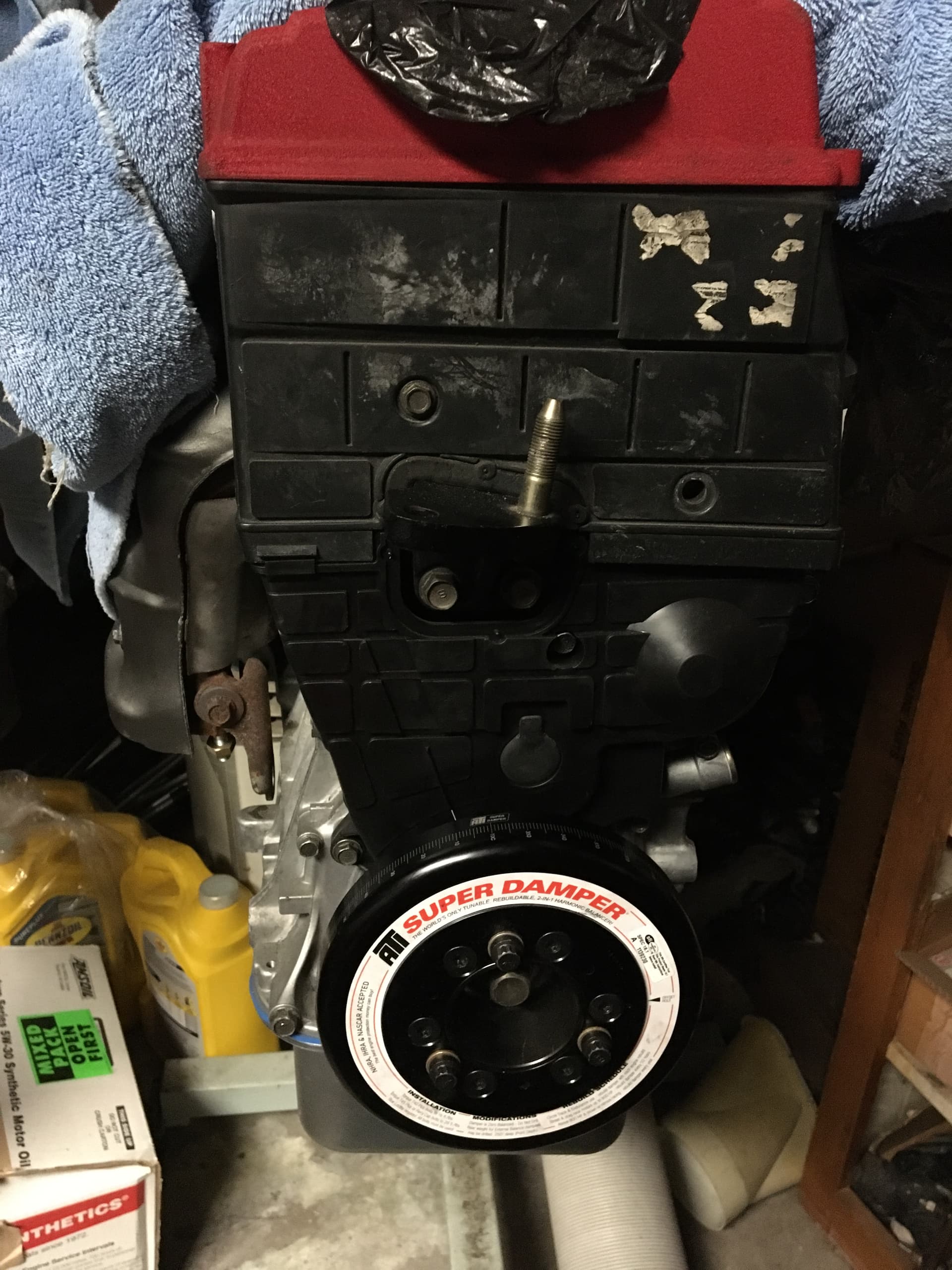
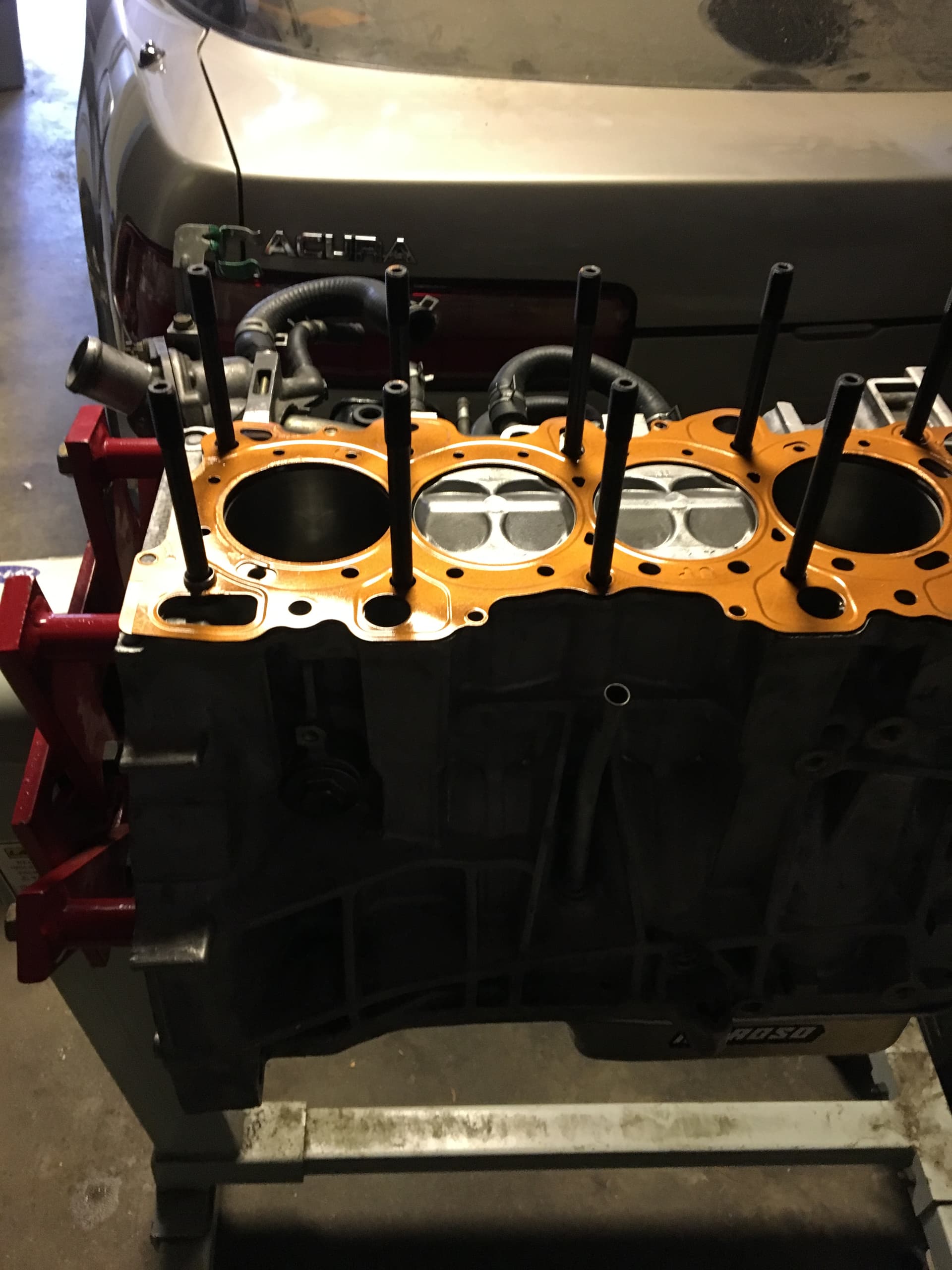
Hello everyone, I am new to this forum a friend recommended me this so I thought of asking about a Frankenstein swap/build that I am doing to my gs 1991 Integra that I’ve obtained for 1k$.
The car came with a b17a1 block stock / b16a JDM head. Unfortunately the ex owner had spun a bearing, regardless of that I accepted the challenge to experience how to rebuild a b series ( first time ).
I’ve found and bought from CT a block b17a1 bore 81.5mm and came with civic type r pistons, rings, b17 rods and b17 crank. It was wrapped in a box, unopened still after 4 years.
I assembled everything and gave me a good reading on the oil light/gap. Crank looked great, block look like it had low miles etc
I am also reusing the b16a JDM head that the car came with ( b17a1 stock spun bearing ).
So my idea was to swap block only and maybe upgrade its pistons ( in this case civic type r/ Nippon racing pistons ).
I sent the head to get a rebuild and resurface and came back looking great ( it was great condition regardless ).
So I am obviously new to the da9 b series as well since I’ve owned an ef si and crx before stock and restored from my part.
My question is do I have to check the valve to piston cleareance? How do you do it ? Anyone recommends any other methods ? Trying to acknowledge myself with experienced ppl as well so I would appreciate an answer from anyone with this kind of acknowledgement.
Until we get more users back here, I agree with @Kip-ft . You’re asking some advanced stuff and if you haven’t seen something similar here via a search, check there too.
Honda Tech has some knowledgeable people but a few keyboard idiots so be careful with advice. I’ve found a lot of the V8/old school sites to be a bit better for general engine questions. This came from the LS1 site but it’s gospel:
Rotate your piston to top dead center. Using a dial indicator on the top of the valve stem and a valve spring compressor, push the valve downward until it lightly contacts the piston. Record the distance measured by the dial indicator. Multiply your cam lobe lift by your rocker arm ratio. Subtract that total valve lift amount from the amount measured by the dial indicator. The difference is what you should have for clearance. If need be, remove the valve spring to avoid coil bind, and move the valve down by hand until it contacts the piston. Then do the math.
As what cam you use is critical that has to be factored in. I hope this helps and good luck. i finally am ready to send my tranny out to get my Integra up and at it again but need to do the check on my B17A that I built:
Alright so you built a b17 that was bored to 81.5mm and most likely it was decked as well if it wasn’t flat already. The same gos for the b16 head. Now you mentioned that your going to running CTR style pistons so from what I know the CTR pistons are super high compression so its looks like a the mountain peak vs the GSR which is also considered high compression as well but it’s more of a mountain with a flat top. With thats being if your using all stocks components in your b16 head then you should be fine. The only time that you would need to worry about valve to piston clearance is if one of these parts were changed to something more aggressive, such as high lift cams which will cause the valves to open up further so the possibility it making contact with the piston is greater. That’s also the case if you’re going to be running flat top valves in some cases. Another reason to worry is if you are going to be running a longer stroke meaning longer rods. Thats the only time you would have to worry about piston of valve clearance. One last note all b-series blocks and heads have an indicator mark showing the life of the deck surface. Now some heads and blocks have been machined and resurfaced many times over so in some cases, you would have to purchase a ticker head gasket to get the motor back in spec. That why some motor have problems with to much slop in the timing belt because they’ve gone undr the specified deck height. I hope that helps!
there used to be another Colorado member on here years ago with a GSR and essentialy the same build but with a type r head. clearance was a concern iniatly but never endend up being an issue in the years he owned the car.